- December 9, 2025
- Comments Off on What Separates Professional Aviation Photographers from Hobbyists
- Posted by Aviation_Photographer
- Photography
What Separates Professional Aviation Photographers from Hobbyists
What Separates Professional Aviation Photographers from Hobbyists
So You Think You’re Ready to Shoot Jets…
You’ve got a camera. You’ve shot interiors, maybe some real estate. You’ve taken a few ramp photos and thought: “I can do this.” But stepping into the world of professional aircraft photography is nothing like grabbing a quick snapshot on the tarmac. It’s an entirely different level of technical control, storytelling, safety awareness, and client expectation.
Whether you’re photographing business jets, FBOs, or luxury aviation interiors, true aviation photography demands a command of light, tight-space composition, workflow precision, and the ability to create imagery that sells aircraft and strengthens brand identity.
This isn’t about definitions, it’s about distinctions. If you want to stand out in a competitive field, here’s what separates professionals from weekend spotters, plus essential aviation photography tips to help you level up.
What Separates Pros From Weekend Spotters
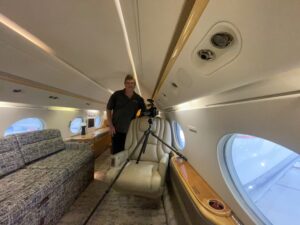 One of the clearest differences? Professionals don’t just accept a scene as-is; they shape it. Beginners often hesitate to touch anything. Pros walk in and immediately evaluate the light, staging, angles, reflections, and mood and begin shaping the environment to match the intended story.
Within moments I’m asking: Lights on or off? Shades up or down? Where do I need duvateen? What needs staging? What tells the right story? These decisions drive the entire shoot.
When I photographed a Boeing 737 recently, the first step wasn’t unpacking gear; it was staging. A jet shot for a sales listing will look entirely different from one photographed for charter marketing.
Here are the habits and skills that define a true professional aviation photographer:
- Mastery of light and space → Cabin height and aisle width force you to shape light intentionally, not just expose the scene.
- Versatility → Exteriors, interiors, twilight hero shots, ramp storytelling, 3D tours, drone work; pros adjust style to purpose.
- Reliability & consistency → Delivering clean, branded, retouched images every time.
- Story-first mindset → Not “a seat by a window,” but “this is where your client begins their journey.”
- Relentless learning → New lighting techniques, new workflows, new gear.
- Business discipline → Relationships with brokers, operators, and FBOs are earned through professionalism.
A single exterior 3/4 shot will tell you immediately whether the photographer understands aviation. Interiors are even more revealing — composition, lighting, staging, and reflection control separate pros from beginners.
I carry duvateen, silks, and shaping tools on every job. They’re not “nice to have.” They’re essential for sculpting reflections, shadows, and atmosphere inside tight jet cabins.
Getting Started: A Practical Path to Breaking In
If you’re serious about becoming a professional, here’s a realistic roadmap. No fluff… just what actually works.
- Start with real estate/interior photography. It teaches lighting, staging, and solving spatial problems under time pressure.
- Build a portfolio. Work with small charter companies, flying clubs, and anyone who says yes. You don’t need to work for free but you do need to create work.
- Reach out to the aviation industry. Brokers, FBOs, charter managers; cold outreach works if your work is strong.
- Practice constantly. Twilight, interiors, exteriors, movement, detail work; repetition creates mastery.
- Invest in gear strategically. Tilt-shifts, strobes, compact stands, modifiers, clamps, and a flyaway-ready kit.
- Treat it like a business. Communication and reliability matter as much as your images.
- Adapt fast. Aviation changes constantly. Your technique must, too.
A few overlooked gear tips for new aviation photographers:
- Tripods matter. Travel-light but rock-solid. It’s a delicate balance.
- Modifiers matter. It’s not “how bright,” it’s “how well-shaped.”
- Your kit must travel easily. If it doesn’t fly, it doesn’t work for aviation photography.
Every assignment teaches something new. A recent job in Dubai completely changed how I pack and prepare. That growth is part of what makes this career exciting.
A Reality Check: It’s Hard, But Worth It
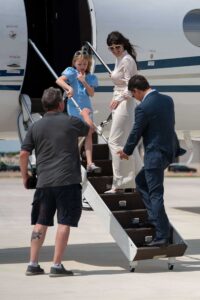 Aviation photography is demanding; long hours, tight cabins, heavy gear, mixed lighting, tight timelines, and clients who expect perfection. And early on, it can feel like no one notices your work.
But when a broker sells an aircraft because your photos elevated the listing… or when a charter operator hires you again because your images convert… those moments make the grind worth it.
Perfection is expected. Mistakes happen. Professionals fix them and never deliver substandard work.
Most photographers take 5–10 years to become full-time in aviation. But if you have passion, discipline, and the willingness to crawl around a jet cabin for the perfect shot, there is absolutely room for you here.
Final Thoughts
This field rewards clarity, consistency, curiosity, and persistence. If you’ve read this far, you’re already doing more than most beginners ever will.
Keep practicing. Keep pushing. Keep showing up. Because the jets are out there and someone has to photograph them.
What is aviation lifestyle photography, and how is it different from standard aircraft photography?
Aviation lifestyle photography blends aircraft imagery with people-focused storytelling. Instead of showing an empty cabin or static aircraft, it captures passengers, crew, and staff interacting naturally, boarding, relaxing in the cabin, working, or transitioning through the FBO. This combination of aviation accuracy and human emotion is what defines private jet lifestyle photography and makes it valuable for branding and marketing.
Who typically hires an aviation lifestyle photographer?
Most clients are advertising agencies, charter operators, FBOs, aircraft brokers, and aviation brands who need imagery that shows the passenger experience, not just the aircraft. These images support campaigns, websites, landing pages, social media, presentations, and premium marketing for private aviation brands.
What makes private jet lifestyle photography effective for aviation marketing?
Private jet lifestyle photography is effective because it shows how the service feels not just what the aircraft looks like. Agencies and operators use these images to communicate safety, comfort, exclusivity, seamless service, and emotional connection. Lifestyle images consistently outperform static aircraft photos in ads, email marketing, and landing pages.
Do you provide actors or models for aviation lifestyle photo shoots?
Yes. We source professional talent through vetted agencies and present curated shortlists that match your brand aesthetics and demographics. All talent is fully released for the agreed commercial usage. Many clients choose a mix of professional actors + real crew for an authentic private aviation look.
Can aviation lifestyle photography include real staff, pilots, or executives?
Absolutely. Many brands prefer real crew and leadership because it feels more authentic. We provide gentle on-set direction so non-actors look natural on camera, and we handle any necessary releases. This approach is common for FBO lifestyle photography and charter operator branding.
What types of aviation lifestyle scenes do you photograph?
Common scenes include jet boarding photo sequences, FBO welcomes, ramp interactions, concierge moments, in-cabin work or relaxation, catering service, family travel scenes, pilot–passenger interactions, and branded touchpoints. These are designed to support aviation campaigns and private jet marketing.
What does pre-production look like for an aviation lifestyle shoot?
Pre-production includes creative consultation, shot mapping, talent coordination, wardrobe guidance, location planning, aircraft readiness review, and FBO or airport approvals. Aviation photography requires airside workflow planning and safety coordination, so organized pre-production is essential.
How long does a private jet lifestyle photography session take?
Most aviation lifestyle shoots take one structured production day, depending on the number of locations, scenes, and cast involved. Multi-aircraft or multi-location campaigns may require two or more days. We design schedules around aircraft availability, weather, and operational windows.
Can lifestyle photography be combined with interior and exterior aircraft shoots?
Yes! This is the most common and efficient approach. Many clients build a complete visual library by combining interior, exterior, facility, and lifestyle imagery into a coordinated production window. This ensures consistent color, lighting, and brand presentation across all assets.
Do you handle NDAs, privacy requirements, or sensitive client restrictions?
Yes. Aviation lifestyle photography frequently involves confidential clients and secure environments. We routinely work under NDA, limit identifying details, and provide restricted-access review galleries. All sensitive sequence handling follows your brand and security protocol.
Where can aviation lifestyle images be used?
Images can be licensed for websites, landing pages, digital campaigns, social media, print collateral, presentation decks, brochures, and PR. Licensing is defined clearly at the proposal stage to support agency, operator, and aviation marketing requirements.
What makes your aviation lifestyle photography different from influencer or social-style shoots?
Influencer-style jet photos are fast, loose, and often unrealistic. Professional aviation lifestyle photography is cinematic, brand-aligned, aviation-correct, and designed for high-value commercial use. It includes directed talent, controlled lighting, aviation-safe workflow, and precise storytelling built for premium marketing campaigns.
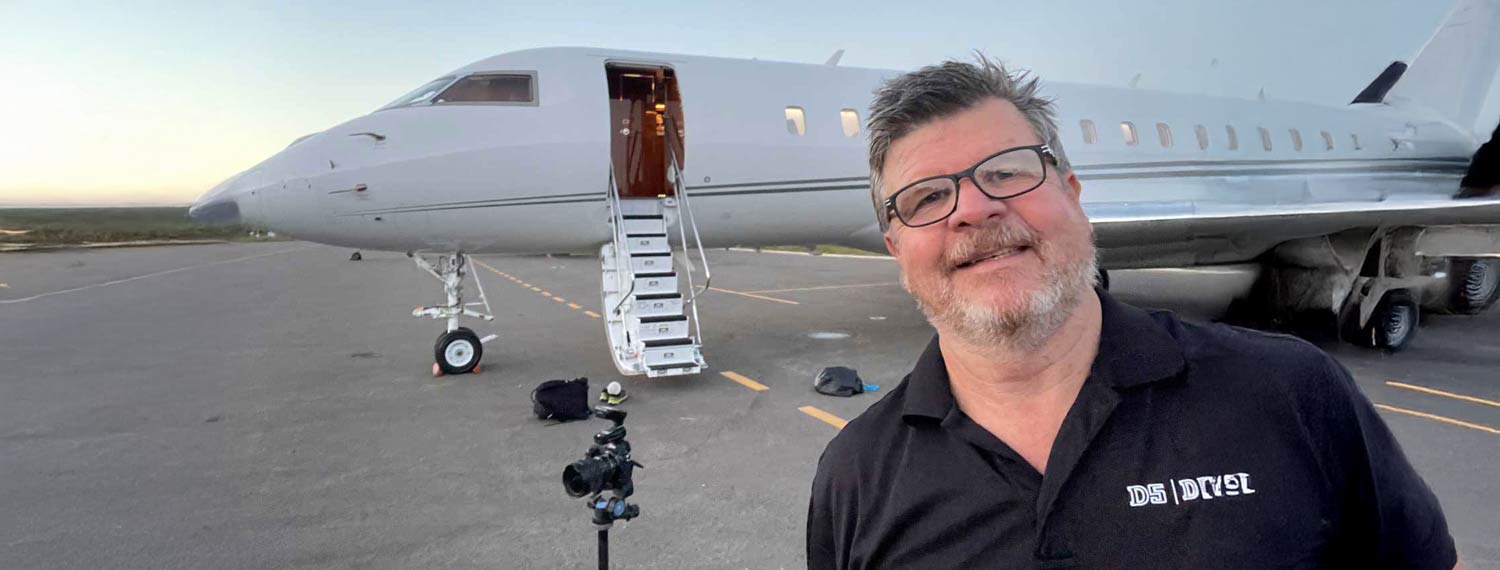
Author: Dave Koch An International aviation photographer specializing in BBJs, ACJs, and high-end charter aircraft across the U.S., Europe, and the Gulf region.
Views: 35