- January 11, 2026
- Comments Off on Why Aviation Photography Is About Logistics, Not Cameras
- Posted by Aviation_Photographer
- General, Photography
Why Aviation Photography Is About Logistics, Not Cameras
Most people assume aviation photography is about cameras, lenses, and lighting techniques.
That assumption usually comes from people who have never worked on an active ramp, coordinated with flight crews, or tried to build a usable image library while weather, access, and schedules are actively working against them.
In reality, aviation photography is not a technical exercise. It is a logistical one.
The Aircraft Is Rarely the Hard Part
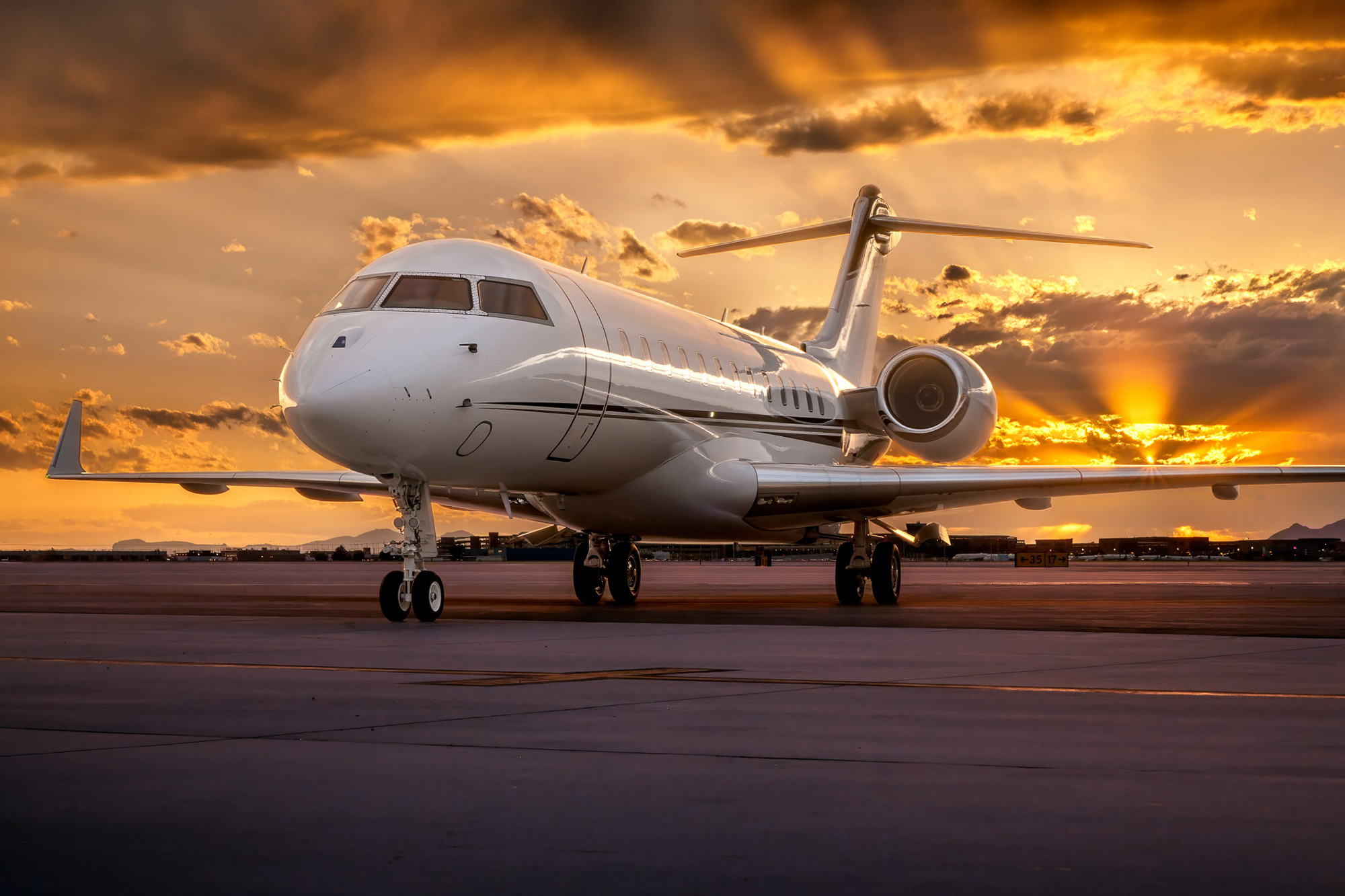
Hero image from properly planned shoot.
Modern cameras are capable. Good photographers are everywhere.
What separates aviation photography from every other commercial discipline is not how the aircraft looks. It is everything surrounding it.
Aircraft move. Crews rotate. Weather windows collapse. Access changes without notice. Airports operate on priorities that have nothing to do with marketing schedules.
You can have the best camera in the world and still fail the shoot if you do not understand how aviation actually works.
Access Is Earned, Not Assumed
In aviation, access is conditional.
You are not shooting a building that will be there tomorrow with the same permissions, availability, and flexibility.
You are working inside secure environments with regulated movement, safety protocols, and real operational consequences.
Sometimes the aircraft cannot be moved. Sometimes the ramp closes early. Sometimes the crew needs the jet immediately. Sometimes weather eliminates exterior work entirely.
The photographer who succeeds is the one who planned for those realities before arriving on site.
Timing Is Everything
Aviation photography lives inside narrow windows.
Golden hour might exist on paper, but operational schedules dictate when an aircraft is actually available.
You take the light you get, when you get it, and you make it work.
That means knowing how to prioritize shots, when to pivot, and when to abandon a setup without losing the overall objective.
If you miss the window, there is rarely a second chance.
Thinking on Your Feet Comes From Experience
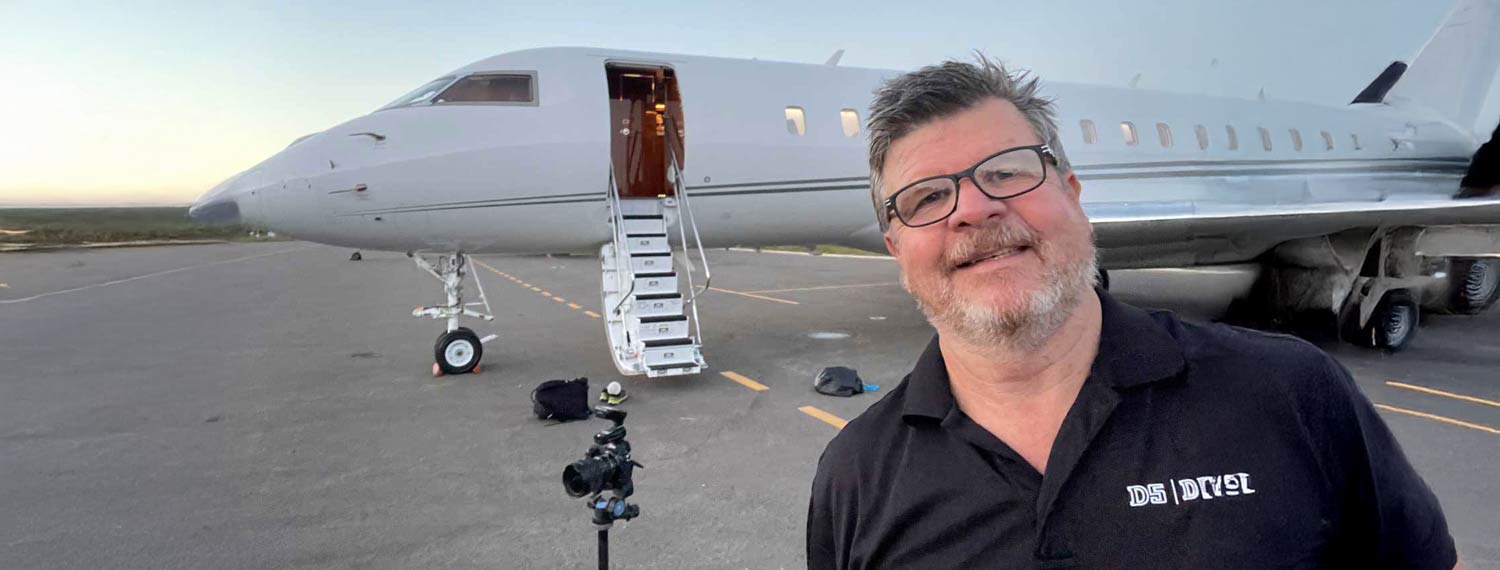
That environment trains you quickly.
You do not get ideal conditions. You do not get perfect light. You do not get a second chance.
Returning to the station without usable footage was not an option.
You learned to work with what you were given, not complain about what you were not. Weather changed. Access disappeared. Schedules collapsed. You adapted and delivered anyway.
That mindset carries directly into aviation photography.
Aviation Does Not Wait for Perfect Conditions
In aviation, waiting for perfect light, perfect weather, or ideal positioning is rarely realistic.
Aircraft operate on operational priorities, not marketing calendars.
When conditions change, the plan changes with them.
The ability to restructure a shoot in real time is not a creative preference. It is a requirement.
What Thinking on Your Feet Looks Like in Practice
A recent two-day aircraft shoot in Virginia is a good example.
The original plan was straightforward: video production on day one, still photography on day two.
Last-minute weather changes made that plan impossible.
Instead of forcing a failing schedule, the production was restructured at the last moment.
One day was dedicated entirely to exterior work while conditions allowed. The second day shifted to interiors, protected from weather and still fully productive inside the hangar.
On paper, that adjustment sounds minor.
In practice, it required understanding how each deliverable could stand alone, how teams needed to shift, and how to protect the final outcome without losing efficiency.
That is logistics in action.
This Is Not Improvisation. It Is Prepared Adaptability.
Thinking on your feet does not mean guessing.
It means having enough experience to recognize when a plan is no longer viable and enough confidence to pivot without creating chaos.
It means knowing which images are mission-critical, which can be deferred, and how to protect the client’s objectives even when conditions change.
That ability is not learned from equipment. It is learned from experience.
Stakeholders Are Always Watching
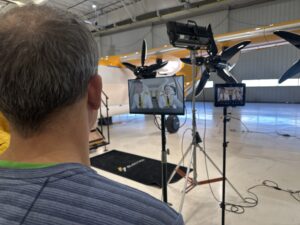
Stakeholders watching the setups
Most aviation shoots involve more than one decision-maker.
Owners, brokers, charter managers, marketing directors, crew, and operations staff all have different priorities.
Often they are on site. Sometimes they are remote, watching through monitors or waiting on updates.
Aviation photography requires confidence, clarity, and the ability to keep production moving without friction.
This is not a space where experimentation happens casually.
Logistics Shape the Final Images
The images that perform best in aviation are rarely accidents.
They are the result of planning around constraints instead of fighting them.
Knowing when to shoot interiors first. Knowing which exterior angles work when an aircraft cannot be repositioned. Knowing how to stage cabins efficiently when crew time is limited.
The camera captures the moment. Logistics create the moment.
Why General Commercial Experience Is Not Enough
Many photographers can produce attractive images.
Very few understand aviation well enough to operate inside it without slowing things down or missing critical opportunities.
Aviation photography rewards preparation, adaptability, and an understanding of how aircraft operations actually function.
That knowledge does not come from gear. It comes from experience.
This Is Why Case Studies Matter
Final images tell only part of the story.
What matters just as much is how those images were achieved under pressure, inside live environments, with real constraints.
That is why detailed case studies exist on this site. Not as portfolios, but as proof of execution.
Aviation Photography Is a Systems Problem
At this level, aviation photography is not about pressing a shutter.
It is about systems. Preparation. Communication. Adaptation.
When those elements are handled correctly, the images follow.
Planning a Shoot
To me, every aviation shoot is a complex puzzle with countless ways it could be assembled.
The difference is experience.
The more productions you have solved under pressure, the clearer the full picture becomes before the first frame is ever captured.
I know how the pieces come together because I have seen where they fail.
That understanding guides every decision on set and allows me to adapt, prioritize, and consistently deliver stronger images, even when conditions are far from ideal.
If you are preparing for a shoot and want to understand how it will actually unfold, the conversation should start with logistics, not gear.
That is where successful aviation photography begins.
Views: 18